
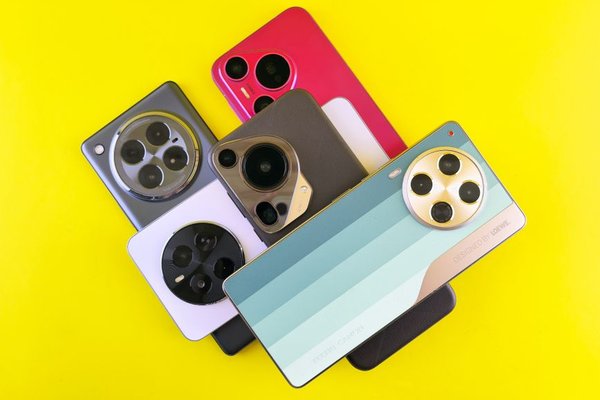
Phone cameras in 2026 are no longer separated by megapixels alone. The real differences appear when you shoot at night, zoom beyond the main lens, photograph moving people or record demanding video. Sensor size matters, but so do optics, stabilisation and the computational photography that combines several frames before you see the finished image.
For photographers, the best camera phone is therefore the one whose strengths match the way you shoot. Samsung, Apple, Google, Xiaomi and OPPO all take noticeably different approaches, and each has a reason to be on this list.
The best camera phones to consider in 2026
Xiaomi 17 Ultra: best for camera-like hardware
The Xiaomi 17 Ultra stands out for ambitious optics. Its main camera uses a 50MP 1-inch sensor with an f/1.67 lens, giving it a strong foundation for low-light scenes and difficult highlights. The headline feature is its 200MP Leica telephoto with a 1/1.4-inch sensor and a mechanical 75–100mm optical zoom range. That lets photographers change framing within the telephoto range without relying entirely on digital cropping.
It is particularly attractive for travel, portraits and detail photography. The phone also supports 4K 120fps video and Log recording. If you want camera-focused hardware rather than the simplest point-and-shoot experience, this is one of the strongest options of 2026.
Samsung Galaxy S26 Ultra: best all-round camera system
The Galaxy S26 Ultra is the practical choice for people who want one phone to cover almost every focal length. It combines a 200MP main camera, 50MP ultra-wide, 10MP 3x telephoto and 50MP 5x telephoto. The main lens uses an f/1.4 aperture, while the dedicated 3x and 5x cameras provide genuine optical options for portraits, events and distant subjects.
That flexibility makes the S26 Ultra an easy recommendation for phone photography. It can move from a wide landscape to a portrait and then a distant architectural detail without depending on extreme digital zoom. Samsung also supports 4K 120fps Pro Video and 8K recording, making this one of the most complete all-round systems.
iPhone 17 Pro and Pro Max: best for video creators
Apple’s iPhone 17 Pro models use 48MP main, ultra-wide and telephoto rear cameras. The telephoto provides a native 4x perspective and an 8x optical-quality option derived from the higher-resolution sensor. The main camera also provides a useful 2x crop, covering several everyday focal lengths without asking the user to think much about the processing behind them.
Video is the iPhone’s strongest argument. ProRes RAW, Apple Log 2, dependable autofocus and effective stabilisation make it a natural camera phone for content creators. The 18MP Center Stage front camera also helps solo filming. For creators who edit on a Mac, the wider workflow can matter as much as a small difference in still-image quality.
Google Pixel 10 Pro and Pro XL: best point-and-shoot choice
The Pixel 10 Pro family combines a 50MP main camera with a 1/1.3-inch sensor, 48MP ultra-wide and 48MP 5x telephoto. Google’s bigger advantage, however, is computational photography. Night Sight, Face Unblur, Best Take and Real Tone are designed to handle difficult everyday photos with little manual adjustment.
This makes the Pixel especially good for families, pets and travel moments where you may have one chance to press the shutter. Google offers Pro Zoom up to 100x, although more moderate magnifications generally preserve better detail. For many buyers seeking the best smartphone camera 2026 can offer, the Pixel’s appeal is how little effort it requires.
OPPO Find X9 Pro: best for telephoto detail and manual control
The OPPO Find X9 Pro is another serious photography-focused flagship. Its 50MP main camera uses a 1/1.28-inch sensor with an f/1.5 aperture, while the 200MP Hasselblad telephoto uses a 1/1.56-inch sensor, optical stabilisation and an f/2.1 lens. The telephoto can also focus at around 10cm, adding useful close-up flexibility.
OPPO supports 4K 120fps video, Log recording and manual controls, making the phone appealing to photographers who like adjusting shutter speed, ISO or white balance rather than leaving every decision to automatic processing.
What matters when comparing camera phones?
Megapixel count should not be your first filter. A larger sensor can collect more light, a brighter lens helps in darker scenes, and optical stabilisation can reduce blur when shutter speeds drop. Telephoto hardware matters too. A dedicated 3x, 4x or 5x camera usually gives more dependable results than a huge digital zoom figure on a specification sheet.
Processing style is equally important. Some phones brighten shadows and sharpen detail aggressively, while others preserve a softer look. Portrait skin tones, moving subjects and indoor lighting often reveal these differences more clearly than sunny landscape photos.
A practical way to choose before buying
If you can test phones in person, recreate the scenes you actually photograph. Take a portrait beside a window, photograph someone walking, shoot a dim shop, zoom into a sign across the street and record a short 4K clip while moving. Check faces, fine detail, highlight clipping, motion blur and autofocus transitions instead of judging only one bright daytime image.
For example, a parent photographing children indoors may value the Pixel’s fast computational approach, while a traveller who regularly shoots buildings or wildlife may prefer Samsung’s multiple telephoto options or Xiaomi’s mechanical telephoto zoom. A creator filming interviews may put the iPhone’s video workflow above every still-image advantage.
FAQ
Which phone has the best camera in 2026?
There is no universal winner. Xiaomi 17 Ultra offers unusually ambitious camera hardware, Samsung Galaxy S26 Ultra is highly versatile, iPhone 17 Pro excels at video, Pixel 10 Pro is strong for automatic photography, and OPPO Find X9 Pro combines telephoto capability with manual controls.
Does a larger camera sensor always mean better photos?
No. A larger sensor can improve light gathering, but lens quality, autofocus, stabilisation and processing also affect the final image. Phone photography depends on the entire imaging system rather than one specification.
Which phone is best for zoom photography?
The Xiaomi 17 Ultra is particularly interesting because its 200MP telephoto includes a mechanical 75–100mm optical zoom range. The Galaxy S26 Ultra is also very flexible thanks to separate 3x and 5x telephoto cameras.
Which camera phone is best for video creators?
The iPhone 17 Pro is a leading option because of its stabilisation, autofocus, ProRes RAW and Apple Log 2 support. Xiaomi and OPPO also offer strong 4K recording and Log options for creators who prefer Android.
Which camera phone should you choose?
Choose the Xiaomi 17 Ultra for camera-focused hardware, the Galaxy S26 Ultra for broad versatility, the iPhone 17 Pro for video, the Pixel 10 Pro for effortless everyday photography, or the OPPO Find X9 Pro for telephoto detail and manual control. The best camera phones 2026 has to offer are all capable; the smartest purchase is the one that performs best in the scenes you actually shoot, not simply the one with the biggest headline number.